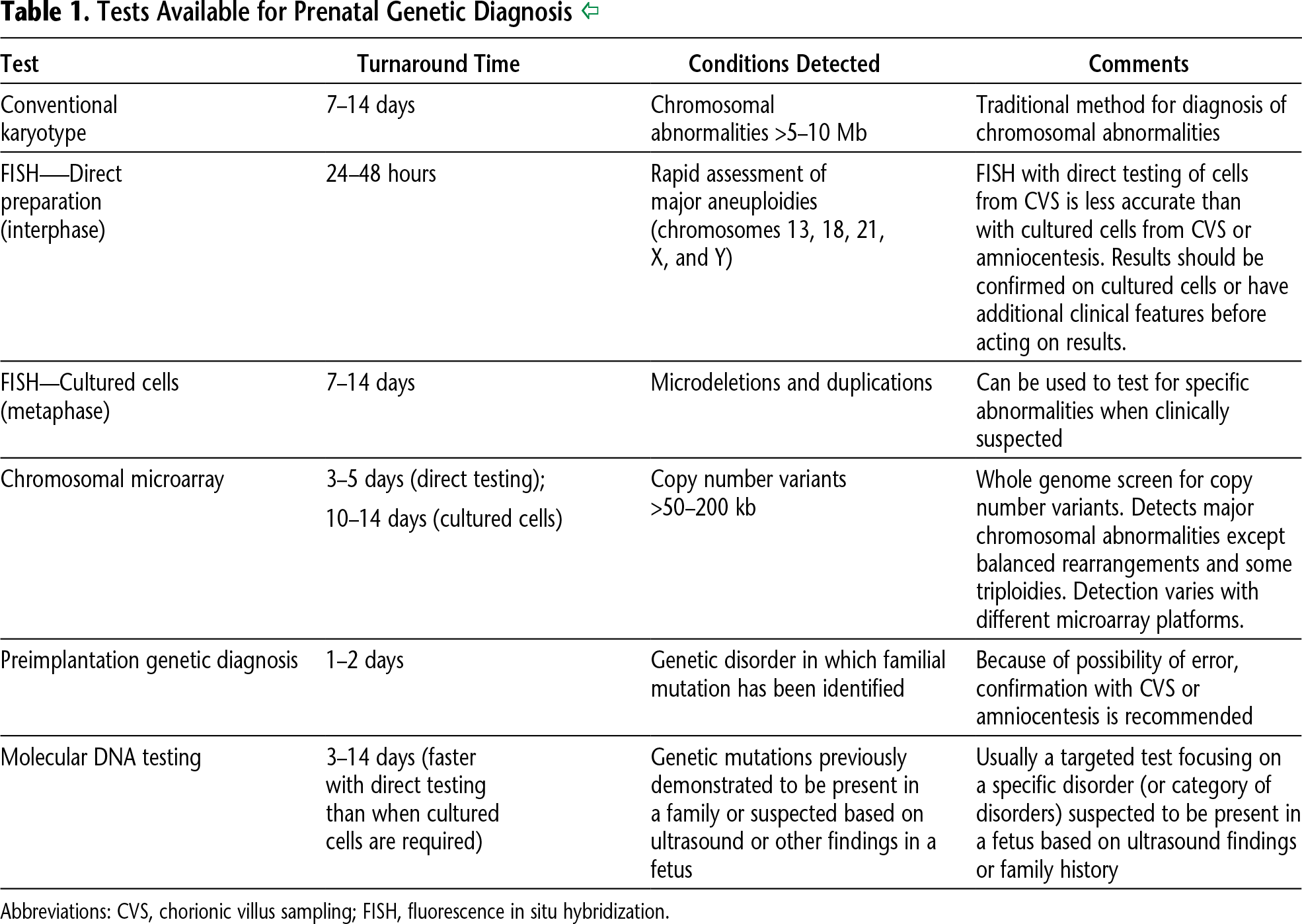

ABSTRACT: Prenatal genetic diagnostic testing is intended to determine, with as much certainty as possible, whether a specific genetic disorder or condition is present in the fetus. In contrast, prenatal genetic screening is designed to assess whether a patient is at increased risk of having a fetus affected by a genetic disorder. Originally, prenatal genetic testing focused primarily on Down syndrome (trisomy 21), but now it is able to detect a broad range of genetic disorders. Although it is necessary to perform amniocentesis or chorionic villus sampling (CVS) to definitively diagnose most genetic disorders, in some circumstances, fetal imaging with ultrasonography, echocardiography, or magnetic resonance imaging may be diagnostic of a particular structural fetal abnormality that is suggestive of an underlying genetic condition.
The objective of prenatal genetic testing is to detect health problems that could affect the woman, fetus, or newborn and provide the patient and her obstetrician–gynecologist or other obstetric care provider with enough information to allow a fully informed decision about pregnancy management. Prenatal genetic testing cannot identify all abnormalities or problems in a fetus, and any testing should be focused on the individual patient’s risks, reproductive goals, and preferences. It is important that patients understand the benefits and limitations of all prenatal screening and diagnostic testing, including the conditions for which tests are available and the conditions that will not be detected by testing. It also is important that patients realize that there is a broad range of clinical presentations, or phenotypes, for many genetic disorders and that results of genetic testing cannot predict all outcomes. Prenatal genetic testing has many benefits, including reassuring patients when results are normal, identifying disorders for which prenatal treatment may provide benefit, optimizing neonatal outcomes by ensuring the appropriate location for delivery and the necessary personnel to care for affected infants, and allowing the opportunity for pregnancy termination.
The purpose of this Practice Bulletin is to review the current status of prenatal genetic diagnostic testing and the evidence supporting its use. For information regarding screening for fetal aneuploidy, refer to Practice Bulletin No. 163, Screening for Fetal Aneuploidy.